 blog
blog
Lightweight Hydrating Concealer: 2026 Buyer's Guide
Table of Contents
- What Makes a Lightweight Hydrating Concealer Different
- Serum Concealer Benefits: Why Skin-Like Texture Wins
- Best Concealer for Dry Under Eyes: What to Look For
- Undertone Matching: The Color Theory Most Shoppers Skip
- How to Apply Concealer for a Natural Look
- Sheer vs. Buildable Coverage: Which Finish Fits Your Routine
- Conclusion
- Frequently Asked Questions
Last Updated: September 29, 2026
What Makes a Lightweight Hydrating Concealer Different
A lightweight hydrating concealer is a thin, moisture-rich formula that evens out skin tone without settling into fine lines or feeling heavy. This guide from Mayuur Naturals breaks down how to choose one for dry, mature, or sensitive under-eyes, and how to apply it so it looks like skin, not makeup.
The difference comes down to texture, water content, and how the formula behaves over time. Traditional concealers lean on waxes and dense pigments, which cover well for an hour before creasing, caking, or pulling at dry patches. A hydrating formula uses lighter emollients and humectants so the product moves with your skin instead of sitting on top of it.
Most guides treat "hydrating" as a marketing word, but it describes a specific formula behavior. A hydrating concealer spreads further with less product, blends with fingertips alone, and leaves a satin or dewy finish rather than flat matte. That skin-like texture is the whole point.
Below, we'll show you what separates a good formula from a disappointing one, which ingredients matter, and how to match a shade to your undertone.
Serum Concealer Benefits: Why Skin-Like Texture Wins
Cream concealers trade heavy coverage for buildable coverage, which pays off for dry or mature skin. The lightweight base lets you layer thin coats until you reach the level you want, instead of starting with a thick layer you can't dial back.
The benefits show up in daily wear:
- Blendability: thin formulas melt into the skin with a fingertip or damp sponge
- Weightless feel: you forget you're wearing it by mid-morning
- Less creasing: flexible formulas bend with expression lines instead of cracking
- Under-eye brightening: light-reflecting pigments soften shadows without glitter
Many people with dry skin find a cream-based formula doubles as light skincare.
Best Concealer for Dry Under Eyes: What to Look For
The best concealer for dry under eyes is built on lightweight oils and butters, with a flexible finish that never sets to a chalky matte. Texture matters more than coverage: a sheer-to-medium formula that stays supple beats a full-coverage one that cracks by noon.
Use this checklist when you're comparing options:
- Finish: satin, dewy, or natural, never flat matte
- Texture: thin and spreadable, not thick or paste-like
- Non-comedogenic: won't clog pores around the eye area
- Buildable: lets you add coverage without a heavy layer
Undertone Matching: The Color Theory Most Shoppers Skip
Undertone matching decides whether concealer disappears into your skin or sits on top as a visible patch. Most shoppers match to surface color and skip undertone entirely, which is why so many end up with a concealer that looks gray, orange, or ashy.
Under-Eye Concern | Undertone Shade to Choose | Why It Works |
|---|---|---|
Blue or purple dark circles | Peach or orange-based | Neutralizes cool tones |
Brown or ashy discoloration | Yellow or golden-based | Cancels dullness |
Redness around the eyes | Green corrector, then concealer | Calms red before coverage |
General dark circles | One shade lighter, matching undertone | Brightens without a gray cast |
How to Apply Concealer for a Natural Look
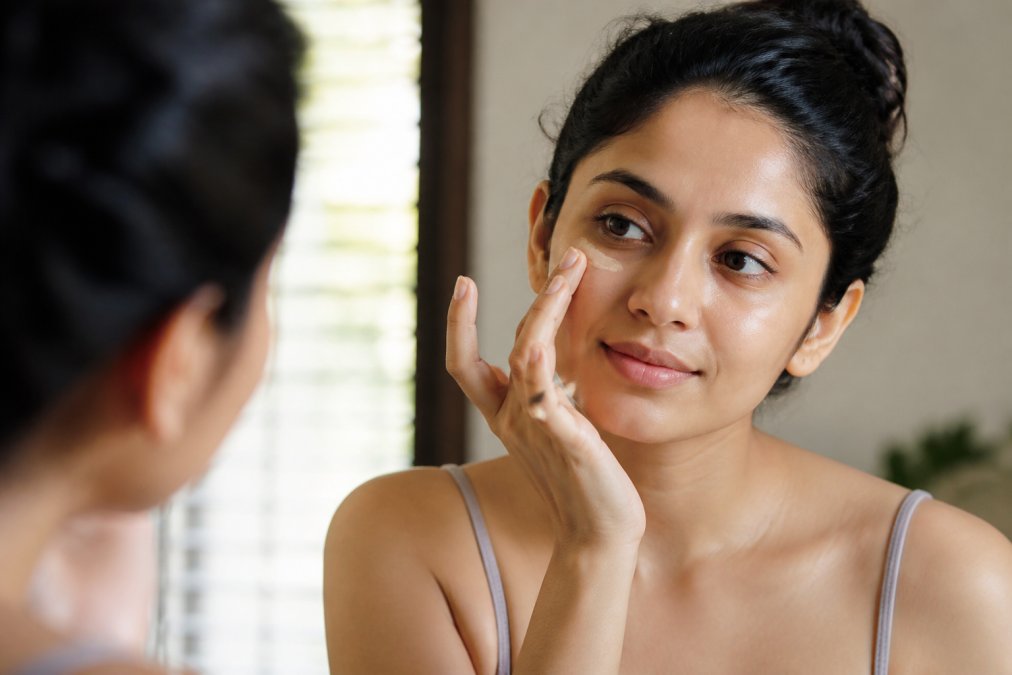
Applying concealer for a natural look comes down to three moves: use less product, tap instead of sweep, and set only where you need it. The goal is skin-like texture, not full opacity.
Sensitive Eyes and Contact Lens Wearers: What Most Guides Skip
If your eyes water, sting, or itch after concealer, the problem is usually not the pigment but where the product migrates. Lightweight hydrating formulas are thin by design, so they travel more easily into the lash line and tear film than a thick, waxy concealer would.
A few habits cut down on irritation:
- Keep product off the waterline and lash roots. Stop your application a millimeter below the lower lash line. The skin there still catches light and brightens the eye without feeding product into the eye itself.
- Apply before your lenses, not after. If you wear soft contacts, put them in after your under-eye makeup has set. This keeps stray product from transferring onto the lens surface.
- Remove thoroughly at night. Thin formulas can leave a residue in the lash line that builds up over a few days and causes irritation. A gentle oil-based cleanser breaks it down without tugging.
Making Lightweight Formulas Last Through Heat and Humidity
A hydrating concealer that looks perfect at 8 a.m. can fade by lunch in warm, humid conditions. The formula isn't failing, it's behaving the way a thin, water-based product does when your skin warms up and produces oil. The fix is technique.
- Start with a mattified base only where you crease. You don't need to powder the whole under-eye. A light touch at the inner corner, where product pools first, buys hours.
- Skip heavy moisturizers directly under the eye on hot days. A rich cream plus a hydrating concealer is two moisture layers competing for the same space. Use a lighter eye gel instead.
- Carry a small sponge, not more product. Blotting away shine and re-tapping the edges with a clean fingertip resets the finish faster than adding a fresh layer.
- Set with a fine powder, not a baking layer. A thin veil holds the formula in place. A thick layer soaks up the hydration you chose the product for in the first place.
Preventing Creasing and Oxidization Through the Day
Creasing happens when product settles into expression lines. Oxidization is different: the formula reacts with your skin's oils and darkens by a shade or two over several hours. Both are manageable.
Sheer vs. Buildable Coverage: Which Finish Fits Your Routine
Sheer coverage evens tone with a whisper of pigment, while buildable coverage lets you layer up to medium or full without the formula turning heavy. The right choice depends on your skin and your day, not on which sounds more impressive.
Conclusion
Finding a lightweight hydrating concealer that delivers is harder than it should be, mostly because so many formulas promise moisture and then set to a dry, creasing finish. The fix: prioritize texture and ingredients over coverage claims, match your undertone, and apply in thin, tapped-in layers.
Frequently Asked Questions
Which is the best hydrating concealer for dry skin?
Look for a lightweight hydrating concealer with a cream base, since these formulas carry moisture-locking ingredients that sit on dry patches instead of clinging to them. Avoid matte, long-wear formulas that rely on drying alcohols. Patch-test first, then build in thin layers until you reach the coverage you want.
What are the main cream concealer benefits for mature or dry skin?
Cream concealer benefits come down to how the formula behaves over time. Because the base is thinner and more emollient, it moves with fine lines instead of settling into them, which reduces creasing through the day. The added hydrating complex also supports the skin barrier, so the under-eye area looks plumper and less tired by evening. Many people find they need less product overall, since buildable coverage layers smoothly without caking.
How do you apply lightweight concealer without creasing?
Start with a moisturized under-eye, then tap a small amount of lightweight hydrating concealer from the inner corner outward using a damp sponge or ring finger. Avoid dragging. Let it settle for a minute before setting only the areas that crease, using a light dusting of finely milled setting powder. In humid weather, choose a sweat-proof or crease-resistant formula and press, don't swipe. Less product in thin layers almost always creases less than one heavy application.
Does a lightweight hydrating concealer work for dark circles and discoloration?
Yes, but color correction matters as much as hydration. For blue or purple dark circles, a peach-toned concealer neutralizes the discoloration before you add your skin-match shade. For brown or gray pigmentation, a slightly warmer undertone helps. A lightweight hydrating concealer with buildable coverage lets you layer color correction underneath without a heavy, cakey result, and the moisture-locking base keeps the area looking bright rather than dry and ashy.